




Managed Cloud Services for Switzerland: A Complete Guide

An overview of managed cloud services in Switzerland and how to ensure resilience, security, and cost control.
Swiss businesses are accelerating cloud adoption to increase agility, strengthen security, and control costs. The preferred operating model is managed cloud services that combine infrastructure, operations, security, compliance, and cost governance under one accountable partner. This guide explains the benefits for organizations in Switzerland, outlines deployment strategies including hybrid and multicloud management, and details the compliance landscape with Swiss DSG, GDPR, and ISO frameworks. It also shows why full-scope services matter when workloads include AI, analytics, and regulated data.
What Managed Cloud Services Include
Managed cloud services are an end-to-end operating model where a provider designs, migrates, runs, and continuously improves your cloud environments. Unlike basic hosting or single-tool outsourcing, comprehensive managed services cover architecture, automation, observability, incident response, backup and recovery, security baselines, compliance reporting, and cost optimization. The service should integrate public clouds and Swiss private clouds with clear controls and service level objectives.
Benefits for Swiss Businesses
- Cost optimization with FinOps practices and predictable budget controls
- Security by design across identity, encryption, network segmentation, and vulnerability management
- Compliance alignment with Swiss DSG, GDPR, and ISO 27001 frameworks
- Data residency and sovereignty options in Switzerland and the EU
- Resilience through backup, disaster recovery, and geo redundant architectures
- Performance and scalability for AI, analytics, and seasonal demand
- Reduced operational burden so internal teams focus on product and customers
Deployment Strategies: Single Cloud, Hybrid, and Multi-Cloud Management
Single cloud uses one provider for simplicity and speed. Hybrid combines private cloud in Switzerland with public cloud for elasticity and global reach. Multicloud places workloads across more than one public cloud to reduce lock in and leverage strengths per provider. A managed approach standardizes landing zones, identity, and policy controls across all environments so governance, security, and cost remain consistent.
Key Building Blocks
- Landing zones with identity, role based access, network segmentation, key management, logging, and backup
- Infrastructure as Code and CI CD for reproducible environments and rapid change
- Observability and AIOps for full stack monitoring, alerting, and automated remediation
- Service level objectives for availability, performance, recovery, and compliance
- Cost governance with tagging, budgets, commitments, and unit economics
Compliance Considerations in Switzerland
- Swiss DSG and revised FADP: privacy by design, breach notification, and records of processing
- GDPR for EU resident data: lawful basis, data minimization, cross border transfer safeguards
- ISO 27001 for information security management
- Sector rules such as FINMA and DORA for financial services where applicable
- Data residency: keep sensitive workloads in Swiss or EU regions when required
Practical Checklist for Swiss Organizations
- Map regulatory obligations under DSG and GDPR and any sector rules
- Classify workloads by sensitivity and residency requirements
- Define SLOs for availability, latency, recovery, and compliance
- Standardize landing zones with policy as code
- Instrument observability and AIOps across applications and platforms
- Adopt FinOps with tagging, budgets, and unit metrics
- Run disaster recovery tests and rollback drills regularly
Example Scenarios
Finance: A Swiss bank runs core systems in a Swiss private cloud and analytics in public cloud. Managed services enforce encryption, segregation of duties, and cost guardrails while meeting FINMA expectations.
Healthcare: A hospital uses managed multicloud for imaging and research, keeping patient records in Switzerland and leveraging cloud AI for diagnostics with documented evaluation and privacy controls.
Manufacturing: A global exporter adopts hybrid cloud. Observability traces across factories and cloud services reduce incident resolution time, and FinOps showback aligns plant budgets with consumption.
Why Full-Scope Services are Often the Best Fit
Partial offerings that only host infrastructure or provide basic monitoring leave gaps in governance, compliance, and cost control. A full-scope model unifies architecture, automation, observability, incident response, security, and FinOps under one accountable service. For Swiss businesses, this means stronger resilience, audit ready operations, and predictable costs.
Skyquest Delivers:
Skyquest is more than a managed cloud provider. We deliver CloudOps Complete and AI Complete services designed for Swiss and EU businesses that demand resilience, compliance, and speed. Our approach covers the entire lifecycle: from architecture design and migration to day-2 operations, deployments and releases, and continuous optimization, all backed by 24/7 monitoring and expert support; so you can focus on innovation while we handle complexity.
What Sets Us Apart:
- End-to-End CloudOps: Secure landing zones, Infrastructure as Code, CI/CD pipelines, automated patching, and progressive delivery strategies for zero-downtime releases.
- Full Deployment and Release Management: We take care of everything in deploying and releasing your applications, including progressive delivery strategies (blue-green, canary), rollback plans, and compliance checks for every release.
- AI-Native Expertise: Custom AI platforms with MLOps and LLMOps pipelines, versioning, evaluation, and rollback capabilities for safe and auditable AI deployments.
- Security and Compliance by Design: ISO 27001-aligned controls, zero trust architecture, encryption at rest and in transit, identity federation, and continuous GRC mapping for GDPR, Swiss DSG, and EU AI Act readiness.
- Observability and AIOps: Unified monitoring, automated remediation, and predictive insights to reduce incidents and improve reliability.
- FinOps Optimization: Transparent cost governance, tagging, budgeting, and anomaly detection to keep cloud and AI costs predictable and efficient.
- Swiss and EU Data Residency: Sovereign cloud options for regulated workloads and strict compliance requirements.
The result is a fully managed, audit-ready operating model that scales with your business, accelerates delivery, and ensures trust in every deployment.
Conclusion
Managed cloud services are a practical path for Swiss organizations to modernize securely and efficiently. By selecting a partner that covers design, migration, operations, compliance, and cost governance, teams gain reliability and clarity while focusing on core business outcomes.
Author
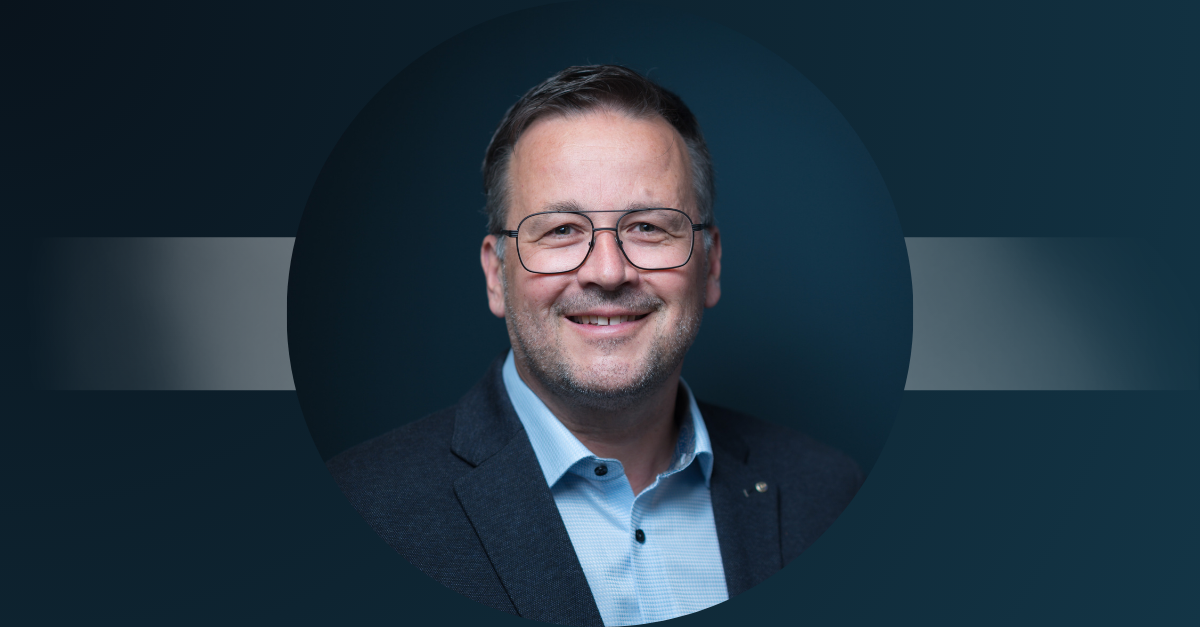
Andrea Borzì - Head of Software Operations




Ready to get started together?
We provide you with personal support and stand by your side as a long-term, reliable partner.